
Seconds count during emergencies, which is why first responders need to be able to communicate amongst themselves, as well as with their local dispatch station, when responding to emergencies. The radios that first responders carry, known as two-way radios, need to be a size and weight that isn’t prohibitive to them safely completing their job. Emergency Responder Radio Coverage (ERRC) Systems can allow first responders to communicate in locations that may block or weaken the strength of their handheld radios. When seconds count, ERRC systems dramatically improve the safety of first responders and the people they are rescuing.
First Responders’ Use of Two-Way Radio
The two-way radios that first responders use are more powerful versions of the “walkie-talkies” that families use while camping. The “two-way” part of a two-way radio means that the radio is capable of receiving, as well as sending, radio transmissions.
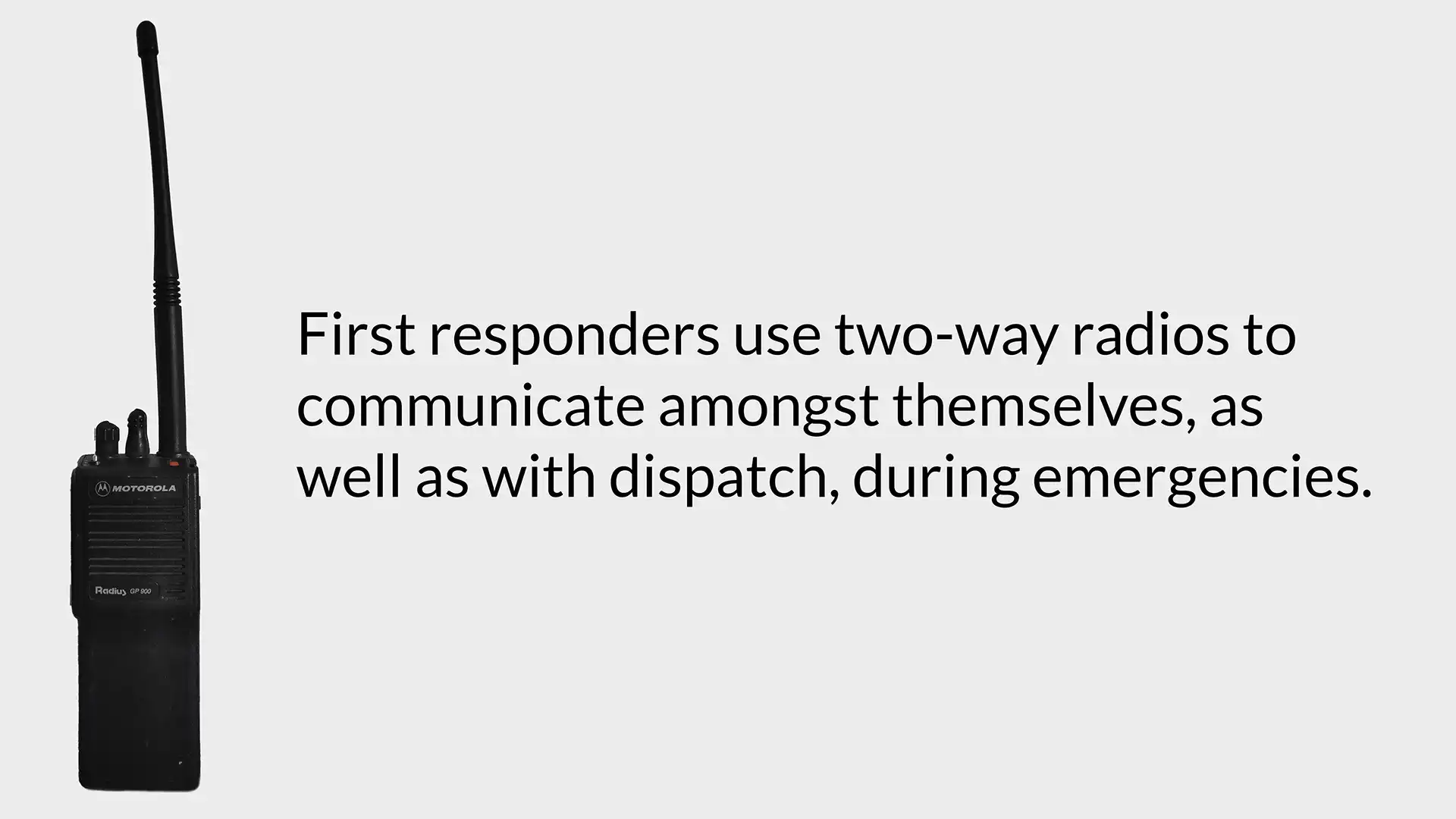
Due to the size restrictions of handheld, two-way radios, they transmit signals at a lower power than is often needed to get their message all the way back to the dispatch center. Distance, as well as obstacles, between the individual first responders have a dramatic effect on the first responder’s ability to communicate via radio amongst each other.
Modern Building Methods are not Radio Friendly
Environmental features have the greatest impact on how effectively first responders can communicate via radios. Since two-way radios rely largely on line of sight for clear communication, any barrier between any two radios can weaken their signals. These are some common things that may weaken radio signals:
- Geographic features such as mountains, hills, or forests
- Green building materials like low-emission glass or foil-faced insulation
- Concrete and metal building construction
- Electronics that create interference
One of the largest contributors to weakened radio signals is modern building materials. In order to create buildings that are more energy efficient, architects and engineers often employ materials like low-emission glass and insulation. Additionally, modern construction methods leave few gaps in these materials; a benefit for ensuring very little energy escapes the building, but a difficulty for radio waves that need to make it to their intended destination.
ERRC Systems feature antennas throughout “dead zones” in buildings, where first responders’ radios aren’t able to communicate out of the building. This system of antennas connects to a more powerful antenna, typically on the rooftop, with a clearer line of sight to dispatch. As first responders speak into their radios, the in-building antennas pass the transmission to the external antenna and on to dispatch. If dispatch transmits back to the first responder, the radio signal follows the reverse path.
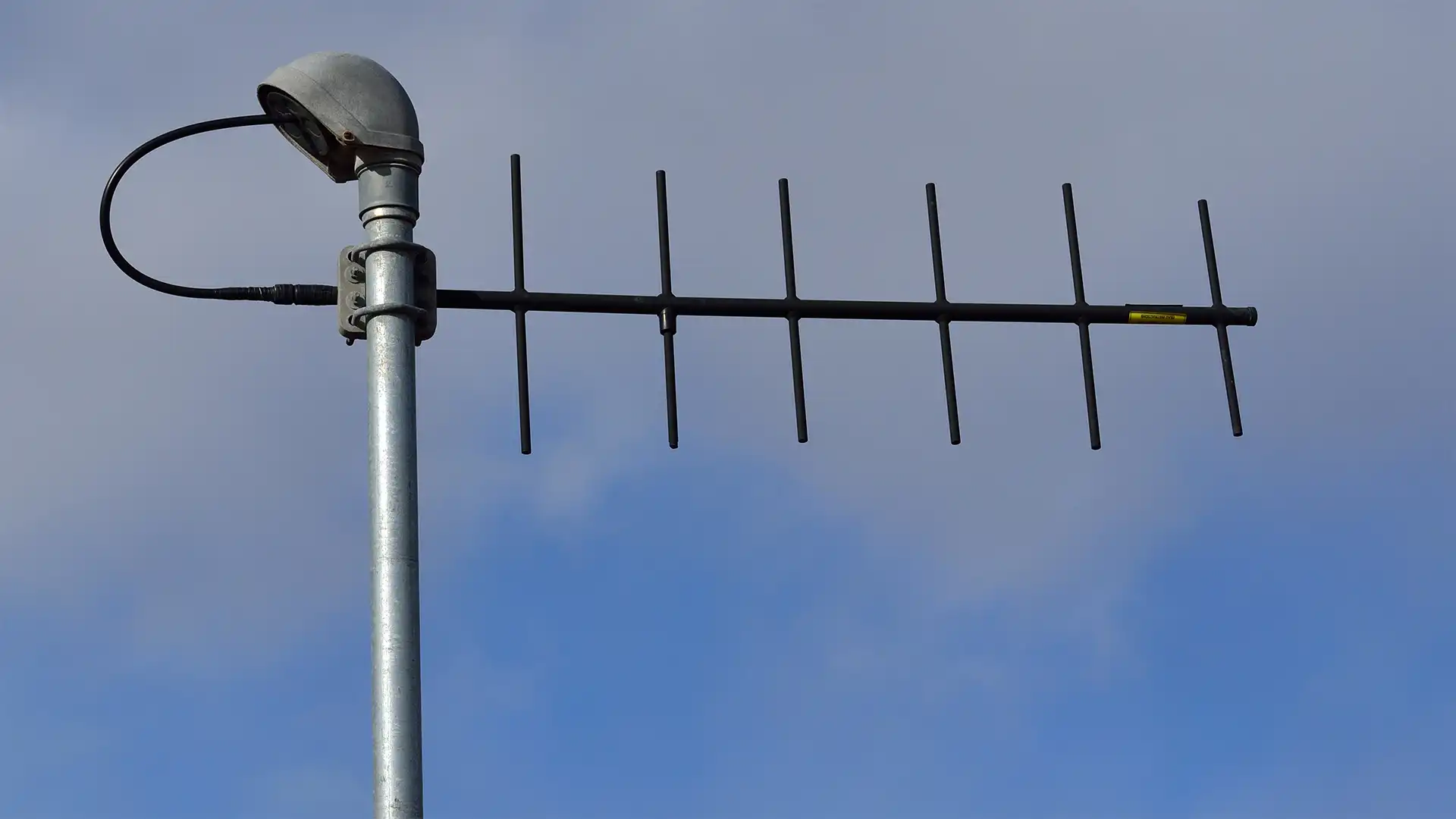
This powerful electronic system enables clear communication in environments that would otherwise leave first responders on their own.
Do All Buildings Need ERRC Systems?
The only way to know if a building needs an ERRC system is through testing performed by a general radiotelephone operator license (GROL)-certified professional. This professional will test the building in accordance with NFPA 1225, utilizing equipment approved by the local authority having jurisdiction (AHJ).
If the building passes the inspection, meaning first responders have sufficient radio signal strength to communicate back and forth with dispatch (as well as with other first responders), the building does not need any supplemental ERRC system.
If there isn’t sufficient radio strength for first responders to communicate back and forth, the building fails inspection, and it needs supplementary ERRC systems in the areas with insufficient signal strength. Buildings with fewer “dead zones” will need fewer internal antennas, and buildings with more “dead zones” will need more internal antennas.
The Need for Ongoing ERRCS Testing
Once an ERRC system is installed, ongoing testing is vital to ensuring its compliance with local codes. Changes to buildings, such as remodels or additions, require subsequent tests to ensure the building’s compliance. Additionally, most jurisdictions require testing every year, with a more in-depth recertification test every five years. If at any point the building fails one of these follow-up tests, the owner will need to work with an ERRC system designer and installer to make the building compliant with the local code requirements.
There is no way to know whether a building needs an ERRC system without testing it.
Conclusion
Two-way radio communication is vital to first responders’ success during emergencies. It is the responsibility of building owners to comply with the regulations set forth by their AHJ. A firm that specializes in ERRC systems will be able to test a building and determine its compliance, as well as if it needs a supplementary ERRC system.
Contact the Experts

Ray Dotts
Ray Dotts has over 45 years of experience with fire alarm and security systems. He uses his extensive experience to provide internal and external training on fire and intrusion alarm systems and emergency responder radio coverage compliance/systems. He also manages all phases of fire alarm, intrusion alarm, and emergency responder radio coverage system installations.
Frequently Asked Questions
What is An ERRC System?
ERRC Systems extend first responders’ radio coverage into areas where they otherwise wouldn’t be able to communicate with their handheld radios. The system is built upon a system of antennas and networking equipment that can receive, amplify, and send radio communications between first responders and their dispatch center.
Who installs/maintains ERRC Systems?
Contractors that specialize in the design, installation, and maintenance of ERRC systems perform installation and maintenance services.
How often does the ERRC System Need Updates?
As long as the system is passing its annual and five-year inspections, the hardware doesn’t need to be replaced or updated. If individual components fail, they can be replaced as needed. If the system fails an inspection, the system designer and installer can extend the existing systems into the areas where it is insufficient.
Are ERRC Systems Required by Code?
Local jurisdictions often require ERRC systems in areas where first responders’ radios aren’t able to communicate with each other. The NFPA code concerning ERRC systems is NFPA 1225. Refer to your local AHJ for more details on the requirements for these systems.
Why Would a Building Need an ERRC System?
If first responders are not able to communicate outside of the building with their radios, then the local AHJ may require the facility install an ERRC system to strengthen radio coverage.