Fire protection engineering is a critical yet often overlooked discipline focused on protecting people and property from the impacts of a fire. Despite its importance, many are unaware of the field and the career opportunities.
This article highlights the career path of an early-career consultant at Telgian Engineering & Consulting, Zoe Wagner, offering insight into how she entered the field and what aspiring professionals can expect from a career in fire protection consulting.
What is the main role of a fire protection consultant?
Fire protection consultants contribute to keeping people and buildings safe by assessing fire protection and life safety systems to ensure they are functioning properly. This role can consist of hands-on field work and/or office-based assessments.
What made you interested in becoming a fire protection consultant?
Part of the reason I pursued consulting was to make a real difference, and I figured an industry focused on protecting lives and property would be a great place to start. I first heard about the industry when I connected with Telgian during my last year of undergrad. While consulting was not initially on my radar, I knew it would provide hands-on learning and new experiences for me.
What do you like about being a fire protection consultant?
I learn something every day and am constantly growing as a consultant, which is my favorite aspect of the role. What I’ve learned during my time as a fire protection consultant has been invaluable for my professional development and love of learning.
Field-Based Tasks
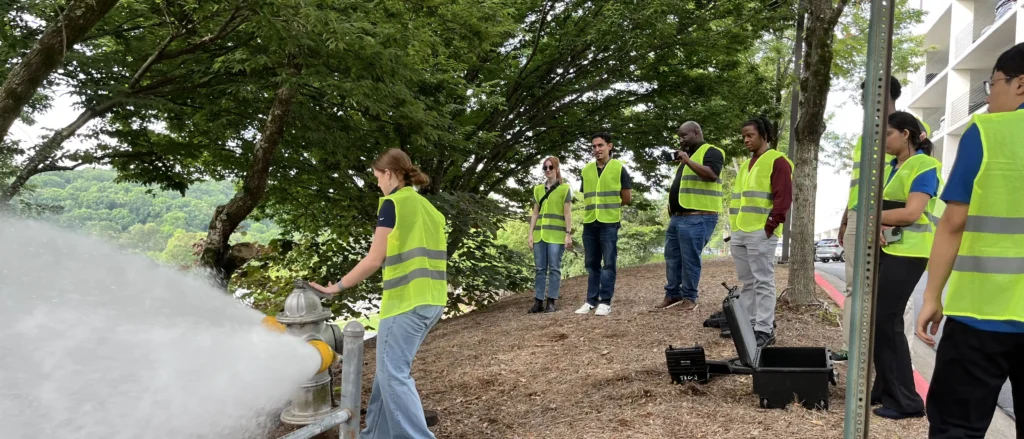
I love the challenge that each project brings. I’ve learned to expect the unexpected because experiences in the field are not cookie-cutter. I’ve learned so much in my short time as a consultant due to the variety of experiences, especially when a site visit didn’t go as planned. It’s also hard to complain about being able to see new places.
I love the challenge that each project brings. I’ve learned to expect the unexpected because experiences in the field are not cookie-cutter.
Office-Based Work
I have recently started performing office-based consulting work, which has furthered my interest in the field. Office-based vs. field-based consulting require different approaches because the problems I’m solving are different. However, my field experience helps inform my office tasks, such as technical reports, so I’m happy to have experience in both areas.
What background does a consultant need to be successful in the field?
Any degree of education or background can become a fire protection consultant.
Many professionals have a fire protection engineering education or an education in an applicable engineering discipline. These degrees are beneficial as a foundational understanding, but consultants do not need an engineering degree to be successful in the field.
Experience is important for a consultant’s learning and growth, as these experiences can show you how a problem might affect a system’s performance, or how your recommendation may change the overall performance of a fire protection system.
These degrees are beneficial as a foundational understanding, but consultants do not need an engineering degree to be successful in the field. Hands-on experience is equally, if not more valuable, for a consultant.
What do you do as an entry-level fire protection consultant?
A consultant can be involved in any stage of a project, but most day-to-day work is focused on the beginning and end portions of a project.
Information Gathering (Due Diligence)
The due diligence phase, which is the early stage of a project, is when consultants coordinate with authorities having jurisdiction (AHJ) and perform site visits to obtain any information necessary for the project’s success.
The due diligence phase typically includes:
- Understanding the authority having jurisdiction’s (AHJ) requirements
- Collecting existing site information, including measurements and system conditions
- Obtaining other data, such as hydrant flow testing
Collaboration
When these projects progress, a consultant’s role is to assist others working on a project. For example, if you are working with an existing system, you must work with the AHJ and other stakeholders to have a good understanding of the system so you can make appropriate recommendations for any changes.
End-of-Project Support
Consultants often need to verify that all project stakeholders have met the project requirements and expectations that were set at the start of the project. For example, the consultant may need to do a punch walk to check the installation of a system, or they may need to discuss failed requirements with the AHJ.
On-Call Expertise
A consultant often provides continuous support throughout a project. Some questions may come up during the middle stages of a project that require the consultant’s project or code expertise.
What are some challenges of the role?
Fire protection consultants need to be flexible in all aspects of their role. Some areas they need to have wiggle-room in include
- Getting creative with their workspace. Consultants don’t always have access to an office while in the field.
- Allotting extra time while on-site. Unexpected issues come up, so the site visits may take longer than originally planned.
- Being ok with unstructured work weeks. Oftentimes, consultants work less structured hours so they can balance their phone calls/coordination, field work, and office-based reporting.
Do fire protection consultants specialize in certain types of work?
Fire protection consulting is a field with a lot of range. You can build a career as a generalist, working across many types of systems and project types, or you can choose to specialize in a particular niche. You don’t need to worry about being pigeon-holed. Whether you prefer hands-on system design, code consulting, hazardous materials management, or risk-focused work, there’s a path that fits your strengths.
Testimonials of other TEC Consultants
Angel Toledo, Senior Fire Protection Consultant
10 years in the industry
“I came into the fire protection world right out of college, not really knowing what I was getting into. In my 10-plus years in the industry, I have learned so much, and it has been extraordinarily rewarding for me. Being a consultant, you get the opportunity to put boots on the ground and see real-world problems up front. I have learned the most when I can put my eyes on a situation/problem and work towards resolving it.”
Chloe Chadwick, Fire Protection Consultant
4 years in the industry
“People often ask how I ended up in fire protection, and honestly, it started because it sounded kind of cool. The fire protection industry pulls you behind the scenes to things people never notice, but everyone depends on. It’s a career that constantly challenges you, building problem-solving skills and critical thinking every day. Since I started, there hasn’t been a day I haven’t learned something new. And honestly, cool right? This is an incredible field built around protecting people and the places they rely on.”

Zoe Wagner
Zoe Wagner is a Fire Protection Consultant at Telgian Engineering & Consulting. She came to TEC in June 2025 after graduating from the University of Georgia with a degree in Mechanical Engineering. In her current role, she evaluates the condition and performance of fire protection systems through detailed site observations and engineering analysis. Zoe ensures systems meet applicable codes and standards and works closely with clients and Authorities Having Jurisdiction to develop practical, compliant solutions that enhance safety and reliability.