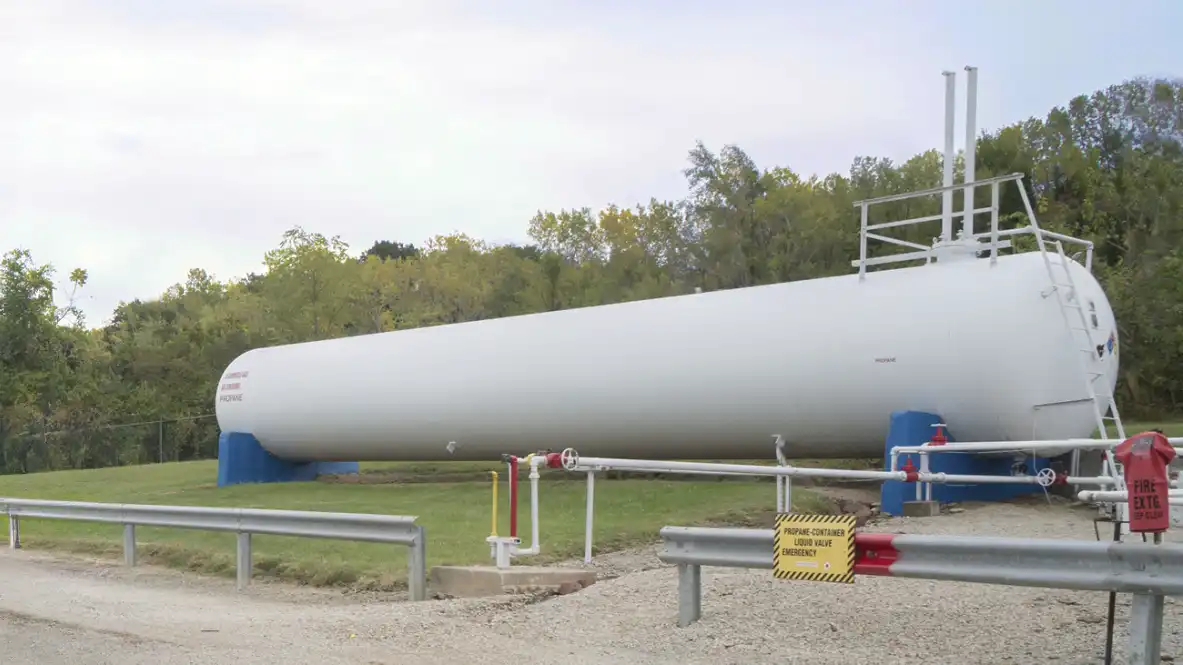
This article explains how the International Building Code (IBC)/International Fire Code (IFC), and National Fire Protection Association (NFPA) frameworks regulate hazardous materials, what triggers operational permits, how maximum allowable quantities (MAQs) and control areas work, and what happens when these limits are exceeded.
It’s intended for facility managers, EHS professionals, and professionals responsible for design, permitting, and operations, as well as authorities having jurisdictions (AHJs). General audiences may find portions informative, though the discussion assumes familiarity with hazardous materials and model code concepts.
How the IBC/IFC and NFPA 1 Paths Shape Design, Permitting, and Operations
Hazardous materials (HazMat) can turn what would otherwise be a minor upset into a high-consequence event. The major U.S. model codes, including the International Fire Code and the International Building Code, as well as NFPA 1 Fire Code, exist to ensure a reasonable level of safety at these facilities by regulating the quantities of materials and providing additional protection features, as needed, to prevent and control fires, explosions, and toxic exposures.
Understanding operational requirements, maximum allowable quantities (MAQs), and the differences between IFC and NFPA 1 approaches enables you to ensure compliance with these codes and safety in your facility.
The applicable fire code is established by state or local legal adoption, not by the facility. Local jurisdictions adopt specific editions of model codes (e.g., IBC/IFC or NFPA codes) and may amend them. The AHJ, typically the building official and fire code official, interprets and enforces the adopted provisions in their jurisdiction.
1. Permit and Submittal Basics
IFC (International Fire Code)
Many jurisdictions require operational permits for storing, using, or handling hazardous materials above specific threshold amounts. The quantities that trigger an operational permit are different from the MAQs in Chapter 50 of the Hazardous Materials provisions.
Under the IFC, an operational permit is required to store, dispense, use, or handle hazardous materials in excess of the amounts listed in Table 105.5.22 (2024 IFC; other editions may vary). This table includes categories such as combustible liquids, corrosive materials, explosive materials, flammable materials, highly toxic materials, organic peroxides, oxidizing materials, pyrophoric materials, and reactive and water-reactive materials.
These permit thresholds are typically smaller than the Chapter 50 MAQs; the intent is to acknowledge the presence of these materials and inform the AHJ. It is also important to note that local adoptions vary; your AHJ may or may not have adopted this section, and some AHJs establish different thresholds and requirements.
Regarding the permit submittal, many AHJs use their own forms and reporting layouts for quantities. A common method is to require a Hazardous Materials Management Plan (HMMP) and/or a Hazardous Materials Inventory Statement (HMIS). IFC Appendix H provides a standardized submittal format and content, and Appendix E lists many chemicals by hazard class. However, appendices are only mandatory where adopted; some jurisdictions that adopt the IFC do not adopt the appendices. In addition, many jurisdictions allow the use of Tier II reporting required by the U.S. Environmental Protection Agency under the Emergency Planning and Community Right-to-Know Act (EPCRA) as an equivalent to HMIS requirements. As always, it is essential to confirm the specific expectations with your AHJ.
NFPA 1 (Fire Code)
NFPA 1 follows a similar approach to the IFC, requiring operational permits when quantities or specific operations meet the triggers specified in Section 1.13.8 and organized in Tables 1.13.8(a) through 1.13.8(d).
For hazardous materials, these permit thresholds are independent of design MAQs. They are often lower, serving to acknowledge the presence of the materials and give the AHJ oversight of ongoing operations. Because adoption varies, confirm the edition, state supplements, and local amendments with your AHJ.
The codes use the terms store, dispense, use, and handle. Because of this, permit requirements could apply not only to new projects, but also to existing facilities when hazardous materials are introduced, and to warehouses that add a new client space, even if the materials are present only for a short period.
|
Table 1: IFC vs NFPA 1 – Permit Requirements |
||
|
Aspect |
IFC (International Fire Code) |
NFPA 1 – Fire Code |
|
Permit reference in the codes |
Table 105.22 (Based on the 2024 edition) |
Section 1.13.8, Tables 1.13.8(a)–1.13.8(d) |
|
Relationship to design MAQs |
Different from Chapter 50 MAQs; thresholds are typically smaller; intent is AHJ awareness |
Independent of design MAQs; often lower to acknowledge presence and provide oversight |
|
Submittal documents/formats |
Many AHJs require HMMP and/or HMIS; IFC Appendix H gives standardized format/content; Appendix E lists chemicals by hazard class; some AHJs allow EPA EPCRA Tier II in lieu of HMIS |
More AHJ-specific; confirm required forms and whether alternatives (e.g., EPCRA Tier II) are accepted |
|
Adoption/amendments |
Local adoption varies; appendices only mandatory where adopted |
Adoption varies by edition, state supplements, and local amendments |
|
Applicability |
Applies to existing facilities when hazardous materials are introduced, as well as new construction |
permits tied to quantities/operations, not just new construction |
2. How MAQs and Control Areas Work
In both the IFC and NFPA 1, hazardous materials are managed with MAQ tables that separate storage, use in closed systems, and use in open systems, and that also distinguish by physical state. For the definitions, storage covers materials that are not being used. A closed system maintains the material inside vessels or piping during normal operations, preventing product and vapors from being released into the room. For example, a sealed circulation loop and an open system expose product or vapors to the room during normal operations, such as dispensing, mixing in open containers, or dip tanks.
A control area is a space where the amount of hazardous materials does not exceed the maximum allowable quantity for that control area, whether indoors or outdoors. The MAQ is the per-control-area limit of a given material before higher hazard safeguards are implemented, and often a change in occupancy classification is triggered. The concept is presented in the IBC and IFC in Tables 5003.1.1(1) through 5003.1.1(4), and in NFPA 1, Chapter 60, with cross-references to NFPA 400. The codes allow you to increase the total stored amount in the building without triggering an occupancy change or adding additional protection levels by subdividing a building into control areas.
The increase in quantities through control areas relies on compartmentation with fire-rated construction. The limits on control areas in a building are specified in IBC Table 414.2.2 and NFPA 1 Table 60.4.2.2.1. Both IFC and NFPA 1 also allow common increases to the baseline MAQ where the table footnotes permit them, plus 100 percent with an approved automatic sprinkler system, plus 100 percent when stored in listed or approved cabinets, gas cabinets, or rooms, or exhausted enclosures. These increases are accumulative when both conditions apply (e.g., 1X → 2X → 4X total).
3. What Happens if You Exceed the MAQ?

IBC/IFC Path
Under the IBC/IFC framework, when MAQs are exceeded in a control area, that portion is classified as Group H (High-Hazard). This triggers additional requirements for construction, fire-resistance separations, egress, explosion control, and fire protection, and it subjects the space to Group H limits on allowable building height, number of stories, and allowable area.
NFPA 1/NFPA 400 Path
In the NFPA approach, users begin with the general MAQ tables. If the building exceeds the tabular values for hazardous materials, additional provisions apply. When the quantity in a control area exceeds the MAQ, added protections, called Protection Levels, are required, ranging from Protection Level 1 to Protection Level 5, with Level 1 the most stringent.
Unlike the IBC/IFC path, exceeding MAQs under NFPA 1 does not change the occupancy classification. You must meet both the base requirements for the existing occupancy and the measures associated with the applicable Protection Level for the material. NFPA 1 directs users to NFPA 400 – Hazardous Materials Code, for the detailed criteria; Chapter 6 outlines protection requirements by occupancy, including separation for hazard areas and other fire protection and life safety measures.
|
Table 2: IFC vs NFPA – Exceeding MAQs |
||
|
Aspect |
IFC |
NFPA |
|
Change in occupancy classification |
Affected portion is reclassified as Group H, with new limitations may apply to the whole building |
No occupancy change; base occupancy remains. Additional protection Levels (PL 1–5) required |
|
Approach |
BC/IFC requirements for Group H (construction, separations, egress, explosion control, fire protection) |
NFPA 1 directs to NFPA 400; Chapter 6 details protection by occupancy (hazard-area separation, fire protection, life safety) |
|
Effect on building code |
Group H requirements will be applicable |
Additional life safety and separation requirements are applicable as provided in NFPA 400. |
|
Control area approach |
Multiple control areas can be built as allowed in IBC section 414 |
Multiple control areas can be used to avoid protection level requirements as allowed in Chapter 60.
|
4. Special Hazards: Lessons from the Past
Past incidents reveal how minor lapses can escalate into catastrophe. Studying these incidents reveals failure modes, strengthens codes and standards, and sharpens our risk priorities. The lessons below translate directly into design, operations, and permitting choices.
Oxidizers (e.g., ammonium nitrate)
Oxidizers intensify combustion, and some can detonate under confinement or heat. Ammonium nitrate (AN) is an oxidizer; contamination with combustibles can increase the hazard, and fires involving AN could be disastrous.
The West Fertilizer Company Explosion – Texas, 2013
On April 17, 2013, a fire at the West Fertilizer Company in West Texas led to AN detonation that killed 15 people (including 12 emergency responders), injured more than 260, and damaged or destroyed over 150 off-site buildings. Investigators estimated roughly 28-34 tons of AN detonated, on the order of 15,000-20,000 pounds of TNT equivalent, with material being stored in combustible bins contributing to the severity.
Combustible Dusts (sugar, grain, wood, metals)
Ordinary materials can become explosible when dispersed as a dust cloud. A combustible dust explosion occurs when finely divided solids are suspended in air at or above their minimum explosible concentration (MEC) and ignited, generally in a confined or semi-confined space. The high surface area drives rapid deflagration and a steep pressure rise; without venting or suppression, equipment or structures can rupture.
A small primary event often moves settled dust and triggers a larger secondary explosion, which is responsible for much of the damage in historical incidents.
Imperial Sugar Company Dust Explosion – Georgia, 2008
On February 7, 2008, an explosion at the Imperial Sugar refinery in Port Wentworth, Georgia, began inside an enclosed conveyor beneath sugar silos and cascaded into secondary dust explosions across the packaging buildings, killing 14 workers and injuring 36; the U.S. Chemical Safety and Hazard Investigation Board (CSB) cited heavy dust accumulations, inadequate design and maintenance, and an overheated bearing as the likely ignition source, calling the disaster preventable.
Horizon Biofuels Explosion – Nebraska, 2025
Most recently, on July 29, 2025, multiple explosions and a fire at the Horizon Biofuels wood-pellet facility in Fremont, Nebraska, killed three people and heavily damaged the elevator tower. Early reports pointed to accumulated wood dust as a suspected fuel source, and the CSB has opened a formal investigation that remains ongoing.
Codes reference standards (e.g., NFPA 660, Standard for Combustible Dusts and Particulate Solids, which consolidates codes including NFPA 654) for housekeeping, dust collection, spark control, and explosion venting/suppression, where required. Both the IFC and NFPA 1 enforce these controls.
Flammable and Combustible Liquids; Flammable Gases
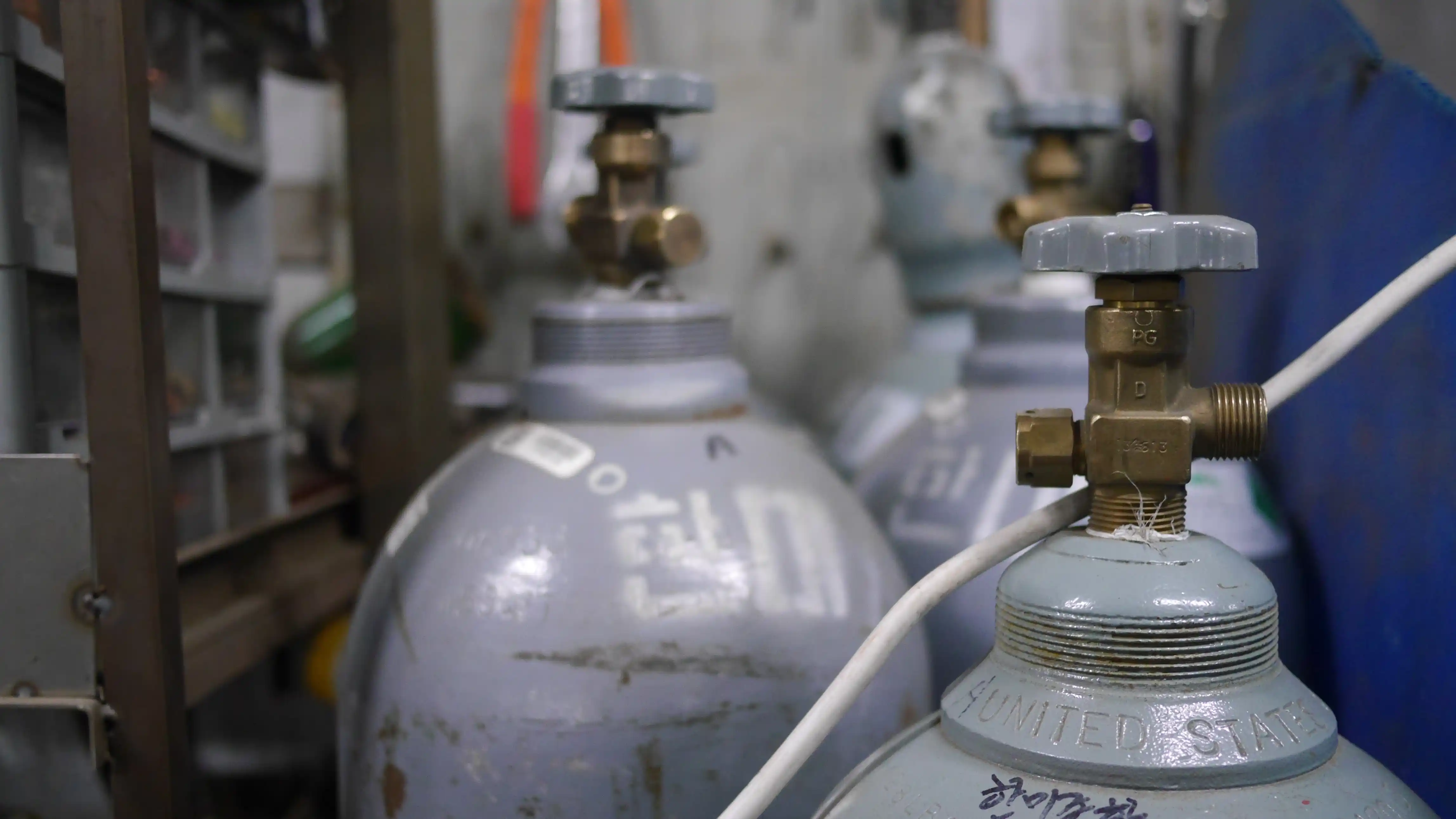
Flammable and combustible liquids and gases can produce fast-growing fires and, when released and ignited as a dispersed cloud, vapor cloud explosions. Typical safeguards include:
- Storing liquids in listed cabinets or inside storage rooms
- Providing mechanical or gravity ventilation for rooms where liquids are dispensed or handled
- Using spill control and secondary containment as required
Depending on the hazard and storage configuration, higher sprinkler or foam application densities may be needed under the applicable standards.
Sherwin-Williams Paint Warehouse fire – Ohio, 1987
A lift truck reportedly toppled containers of flammable product; a spark ignited the spill, and the resulting pool fire quickly overwhelmed the sprinklers in a 190,000-sq-ft warehouse storing roughly 1.5 million gallons of paints and related liquids. One worker was seriously injured, and the most enduring risk was environmental, large volumes of firefighting water mixed with water-insoluble hydrocarbons, creating contaminated runoff that threatened the aquifer. This incident shows multiple risks associated with the flammable liquids in a warehouse setup.
Recent NFPA research on U.S. warehouse fires (2018-2022) found an average of 1,508 incidents per year. When the material first ignited was a flammable or combustible liquid or gas, these events represented 8% of warehouse fires but 34% of civilian injuries. Broken out, flammable/combustible liquids accounted for 6% of fires and 19% of injuries. In comparison, flammable gases accounted for 2% of fires and 15% of injuries, clear evidence that even a smaller share of liquid–gas incidents can drive a disproportionate share of harm.
5. Making It Safer (and Easier to Permit): Practical 101
1. Develop a control-area strategy early in your design process.
Map inventory by hazard class, physical state, and use (storage/open/closed) before design freeze. Engage a qualified fire protection engineer to compare code paths and editions.
2. Keep up with the paperwork.
Keep an accurate HMMP/HMIS with updated floor plans, SDS references, and inventories. Submit with your permit application when required, and update whenever quantities or processes change. Local fire departments often rely on this package for pre-incident planning.
3. Don’t be reactive, be proactive.
Provide the proper protection as required by the approved codes and standards:
- Sprinkler density or foam for flammable liquids
- Explosion venting/suppression and dust collection for combustible dust
- Gas cabinets/rooms and detection for toxic/flammable gases
- Spill control and secondary containment for corrosives and liquids
Design ventilation, emergency power, and controls to prevent a single failure from compromising life safety.
4. Separate incompatibles and control ignition sources.
Keep oxidizers away from fuels. Segregate acids/bases; manage heat, sparks, and static. Many incidents are traced to basic incompatibility errors or uncontrolled hot work. Use labeled storage and physical separation or fire barriers where required.
5. Treat housekeeping like a life-safety system.
For dust-forming operations and general operations, cleaning, enclosure, and capture are essential. The 2008 Imperial Sugar disaster demonstrated that ordinary dust can be fatal; the remedy lies in disciplined operations and housekeeping, not just equipment. Audit hidden accumulation points such as beams, cable trays, and equipment tops.
NFPA’s warehouse fire research (2018-2022) found that “items in the ‘General materials’ classification were the items first ignited in a majority of the warehouse fires…40 percent of the fires, 21 percent of the civilian injuries, and 42 percent of direct property damage. Within this category, rubbish, trash, or waste accounted for 15 percent of the total warehouse fires.”
6. Train and drill.
Workers who transfer, dispense, or respond to leaks must receive training for both normal and upset conditions, including shutoffs, alarms, emergency ventilation, spill kits, and evacuation triggers. Training should be task-specific, include hands-on drills, and be documented; refresh it after any process, inventory, or equipment change.
7. Verify code adoptions and local AHJ requirements.
Coordinate pre-incident plans and walkthroughs with your fire department. Provide ready access to your HMMP and supporting documents, and solicit their input early in the process (e.g., floor plans, control-area limits, SDS index, shutoff locations) so first responders can verify hazards, entry routes, and emergency procedures.
Conclusion
It is vital to involve a qualified fire protection engineer early. They help determine and implement appropriate protections, managing risk consistent with the codes and standards adopted in your local jurisdiction, map control areas and MAQs, and lawfully apply increases. They also right-size protection systems (sprinklers or foam, ventilation and gas detection, dust collection and explosion protection), prepare an updated HMMP/HMIS submittals and Tier II crosswalks, run hazard analyses, coordinate with the AHJ, commission systems, and train staff.
The result is faster permitting, fewer redesigns, lower insurance costs, and safer operations aligned with how your facility actually works or is planned.
About the Author

Saleel Anthrathodiyil, PE, CFPS
Saleel Anthrathodiyil, PE, CFPS is a Fire Protection Team Lead at Telgian Engineering & Consulting (TEC). He is responsible for delivering comprehensive fire protection engineering solutions, with a focus on performance-based design and compliance with local and international codes. He also oversees and provides technical leadership in areas such as smoke control design, code consulting, fire modeling, and life safety strategies across diverse project types.
References
- International Code Council (ICC) (2024) 2024 International Fire Code (IFC): §105.5.22 Hazardous materials (operational permits). Available on the ICC website.
- National Fire Protection Association (NFPA) (2024) NFPA 1—Fire Code (2024 edition), including Chapter 60 (Hazardous Materials). Available on the NFPA website.
- National Fire Protection Association (NFPA) Research (2025) Warehouse Structure Fires (2018–2022 statistics). Available at: https://www.nfpa.org/education-and-research/research/nfpa-research/fire-statistical-reports/warehouse-structure-fires?
- S. Chemical Safety and Hazard Investigation Board (CSB) (2016) West Fertilizer Explosion and Fire—Final Investigation Report (April 17, 2013). Available at: https://www.csb.gov/assets/1/6/west_fertilizer_final_report_for_website_021216.pdf
- S. Chemical Safety and Hazard Investigation Board (CSB) (2009) Imperial Sugar Company Dust Explosion and Fire—Final Investigation Report (February 7, 2008). Available at: https://www.csb.gov/assets/1/20/imperial_sugar_report_final_updated.pdf
- National Fire Protection Association (NFPA) (n.d.) NFPA 400—Hazardous Materials Code (About/Development). Available at: https://www.nfpa.org/codes-and-standards/nfpa-400-standard-development/400